You have done the Maasai Mara. You have watched a leopard drag a kill up a fig tree from the roof of a Land Cruiser. Now you want to feel the ground under your boots, not just the seat springs. A walking safari armed ranger kenya trip is a different kind of encounter, slower, quieter, and honestly a little more nervous. Here is what actually happens, minute by minute.
What a Walking Safari Armed Ranger Kenya Trip Is (And Why It Is Not a Game Drive)
A walking safari means covering ground on foot, usually 5 to 10 km over two to three hours, led by a trained guide and an armed ranger. There is no engine noise. You smell the bush before you see it, wild sage, buffalo dung, the sharp tang of an elephant nearby.
A vehicle game drive covers more distance and finds more animals per hour. Walking finds fewer, but you notice more: a dung beetle rolling its ball, a leopard tortoise track, the exact spot where a hyena den sits under a termite mound. Repeat visitors who have already ticked off the Big Five tend to enjoy this shift in pace the most.
Why the Ranger Carries a Rifle
The rifle is a last resort, not a promise of drama. Most walks end with the ranger never lifting it off his shoulder. His job is to read the bush ahead, check wind direction, and position the group so a startled buffalo or elephant has room to move away without feeling cornered.
Rangers on Kenyan conservancies are typically armed with a bolt-action .375 or .458 rifle, carried by a Kenya Wildlife Service officer or a conservancy scout with equivalent training. Firing at an animal is treated as a serious incident requiring a full report. Guides and rangers I have walked with count it in single digits over entire careers.
Guide and Ranger Qualifications
Look for guides rated through the Kenya Professional Safari Guides Association, known as KPSGA. The system runs Bronze, Silver, and Gold, with Gold guides holding years of field experience and passing rigorous walking and dangerous game exams. Ask your camp which rating your guide holds before you book. A Silver or Gold-rated lead walker paired with an armed ranger is the combination most Laikipia and Samburu conservancies now require.
Where You Can Actually Walk
Not every park allows this. The Maasai Mara National Reserve and Amboseli National Park restrict visitors to vehicles only. Walking safaris are legal in the community conservancies that ring these parks, and in a handful of parks with designated walking zones.
| Location | Walking Allowed? | Escort Required | Distance from Nairobi | Indicative Walking Add-on |
|---|---|---|---|---|
| Maasai Mara National Reserve | No, vehicle only | N/A | 270 km, 5-6 hr drive or 45 min flight | N/A |
| Mara North Conservancy | Yes | Armed ranger and guide | 270 km, same route | $30-40 per person per walk |
| Amboseli National Park | No, vehicle only | N/A | 240 km, 4 hr drive | N/A |
| Kimana Sanctuary (Amboseli ecosystem) | Yes | Armed ranger | 220 km, 4 hr drive | $25-35 per person per walk |
| Il Ngwesi and Loisaba, Laikipia | Yes | Armed ranger | 200 km, 4-5 hr drive | Often included in rate |
| Samburu conservancies (Kalama, West Gate) | Yes | Armed ranger | 320 km, 6 hr drive or 1 hr flight | Often included in rate |
| Ol Donyo, walking safaris in the Chyulu Hills | Yes | Armed ranger | 250 km, 4-5 hr drive or 40 min flight | Often included in rate |
| walking safaris in Tsavo West concessions | Yes, with KWS permit | KWS armed ranger | 240 km, 4-5 hr drive | $20-30 per person per walk |
Figures are indicative ranges based on current conservancy rates and change by season, so confirm with your camp before travel.
The Walk, Minute by Minute
At Loisaba Conservancy in Laikipia, our briefing started at 6:40 in the morning, tea in hand, before the light turned gold. The ranger, a quiet man named Lekwati, laid out the rules. Walk in single file. Stay behind him. No talking above a whisper once we left camp. If he raised a closed fist, freeze.
For the first 40 minutes we saw little beyond dik-dik and a family of warthogs. Then Lekwati stopped hard, fist up. Everyone froze mid-step. Ahead, maybe 60 metres off, a lone buffalo bull lifted his head from grazing and stared straight at us.
He did not move for what felt like a full minute. Lekwati checked the wind with a pinch of ash from his pocket, watching it drift, then angled us sideways along a game trail, never turning his back on the bull. We walked wide, slow, and silent for another five minutes before he let us breathe normally again. The rifle stayed on his shoulder the entire time. That distance and that patience, not a dramatic charge, is what an armed ranger actually does most days.
What to Wear and Bring
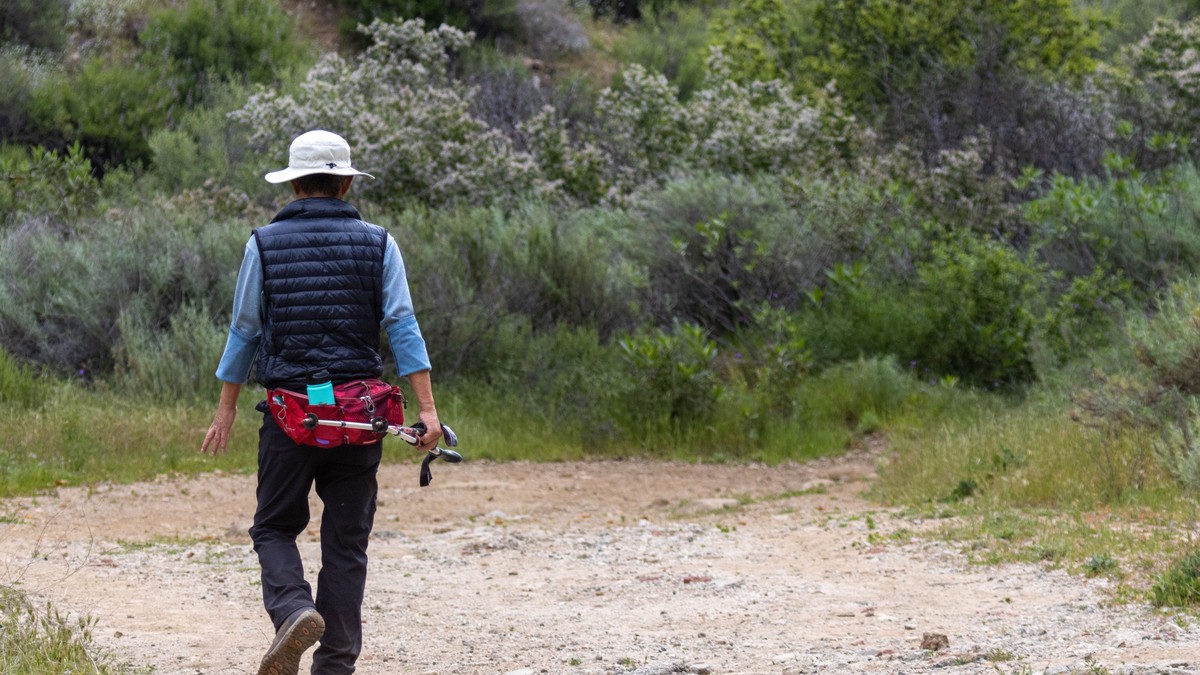
Stick to neutral colors, khaki, olive, and stone. Bright colors and white stand out to animals and to tsetse flies. One rule surprises first-timers most: camouflage patterns are illegal for civilians to wear in Kenya, tied to military and security regulations, so read up on why camouflage clothing is banned on safari before you pack.
Bring closed walking shoes with ankle support, a wide-brimmed hat, sunscreen, and a 1-litre water bottle. Leave perfume and scented lotion at camp. Cameras are welcome, but your guide will tell you when it is safe to raise one, since sudden movement near dangerous game matters more than the shot you might miss.
Age Limits and Family Suitability
Most conservancies set a minimum age of 12 to 16 for walking safaris, since the activity depends on children being able to stay silent and follow instructions instantly. Il Ngwesi and Loisaba both set the bar at 12 with prior camp approval. Families with younger children usually combine a shorter, guided nature walk near camp with vehicle-based drives for the rest of the trip.
Cost and Best Time to Go
Walking safaris are rarely a separate line item at full-service camps in Laikipia and Samburu, where the activity is folded into the nightly rate, typically $450 to $900 per person per night depending on season and camp. Where it is billed separately, such as Kimana Sanctuary or Tsavo West concessions, expect $20 to $40 per person per walk on top of park and conservancy fees.
June through October and January through February offer the driest ground and the clearest tracking conditions. Both are also quieter months across Laikipia and Samburu compared with the Mara’s July migration crowds, which suits repeat visitors looking for fewer vehicles and more space.
The Valley Safaris Difference
We do not sell walking safaris as an adrenaline add-on. We match guests to conservancies where the terrain, the season, and the guide’s rating actually fit what you want. If you want the Loita Hills escarpment for a Maasai cultural walk, or Il Ngwesi for classic Laikipia bush walking, we have stayed there and can tell you which camp’s rangers we trust most.
We also tell you the trade-off upfront. Walking finds fewer animals per hour than a vehicle. If ticking off lion sightings matters most this trip, we will say so and build a mixed itinerary instead of overselling the walk. That honesty, more than any single sighting, is what keeps our guests coming back to plan their next Kenya trip with us.
Plan Your Walking Safari
If a walking safari sounds like the right next step after your Mara trip, we would love to help you plan it. Take a look at our Laikipia and Samburu walking safari itineraries or get in touch with our team to start building your route.